

I was a Star Wars kid growing up. It’s a silly thing to mention, but many people don’t know that Star Wars has done a lot for the film and graphics community. Like, here’s a fun fact!
Did you know that almost of all of the backgrounds in the original Star Wars Trilogy used mostly hand-made backgrounds? Or that the iconic lightsaber sound is just a buzzing sound and the old hum of a projector? All of these clever advances come from one area: design thinking.
What Exactly is Design Thinking?
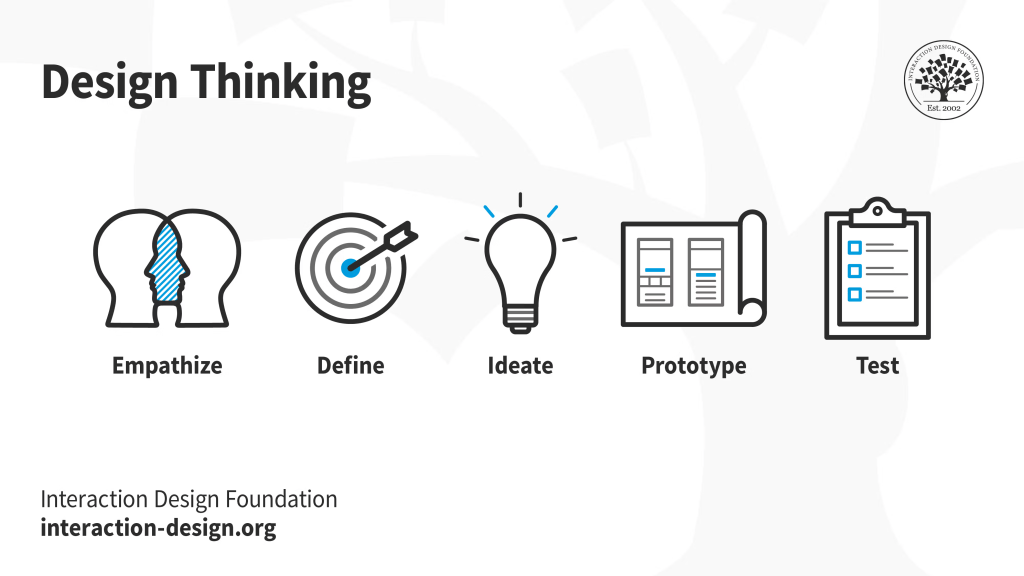
Now I bet you’re thinking. What exactly is Design Thinking? Well, the concept is defined as:
An iterative process in which you seek to understand your users, challenge assumptions, redefine problems, and create innovative solutions that you can prototype and test.
And while obvious, many designers use the concept as a way to create a piece of work while refining said work and then launching it. However, while design thinking is beneficial for designers, the actual concept isn’t solely for designers. In fact, design thinking has especially refined into other creative fields.
A Study on Design Thinking in Other Fields
To get a good picture of what I mean, here’s a list of some of the creative fields that I really want to explore within my future and would like to work in!
- Motion Graphics
- Social Media
- User Experience
- Film
Using these 4 groups, let’s take a look at how design thinking has been implemented into them for the better!
Motion Graphics
Starting off strong, design thinking actually works a lot like the techniques used to make motion graphics. Both are used as a way to redefine ideas and visually see what people would find eye-catching. For example, like brand promotions, motion graphics use the define and ideate phases, especially because many motion graphics need to be made specific in order to promote or visually showcase their content.
Social Media
One subject that has adopted design thinking well is social media. Both in content creation and in digital marketing. Design thinking helps amplify content so that it benefits society in some way. For example, in the article linked, prototyping and testing can be used find social media metrics and how successful they are.
User Experience
Oh, user experience might have it best, though. Funny enough, the reason why design thinking works so well is that you aren’t just creating and evaluating content, but also solving a problem. User experience is especially a field that is made to allow for a user’s experience to be made easier or solve a previous problem. As a result, design thinking in user experience is quite effective because both share the same goal: focusing on a topic that needs to be addressed in order for an audience to enjoy the content.
Film
Lastly, film! While film and graphic design are quite different, both do have their similarities. Both use techniques that focus on visual interest while mixing in proper storytelling. When it comes to design thinking, film actually evolved design thinking into its own version!
Known as Cinematic Design Thinking, the concept serves to help creators design with intention, clarity, and emotional depth, transforming skill and perspective into what algorithms cannot replicate: human resonance. This version also adds in classic film techniques that design doesn’t have, such as thematic intent, audience experience, and more!
What to Take Away From This
I want to leave y’all off with some extra words. For starters, no matter your field, you should use design thinking. It allows for creativity but also structures creation in a way that makes your life easier. And it’s not just creative fields that can use design thinking. Marketing, advertising, mathematics, and chemistry. If something can be made, defined, and evaluated, then design thinking will be there to help!





Leave a Reply