
Have you ever felt so frustrated at a product or app that using it becomes a hassle? You’re not alone. If a product doesn’t support a user’s needs and feelings, there is no point in continuing to use it. That’s why it’s critical for designers to understand the user’s problems and needs. Today, I will discuss a solution to help with this: Point of View Statements.
I crafted POV statements for three apps: YouTube, Spotify, and TikTok. With these POV statements, people can gain a better understanding of why a user’s needs feed into their problems with an app.
How POV Statements Work
POV statements give designers a setup to understand how users’ needs affect their problems. You’ve probably seen these types of statements before, called problem statements. Like them, POV statements define how specific users NEED a feature, environment, or ability to act on BECAUSE they could benefit or be driven away from an app.
These statements can come from anywhere, but we mainly focus on reviews to help define them. I will be using:
- 3 Positive reviews.
- 3 Negative reviews
- 3 Suggestive reviews
Reviews provide specific reasons why a user likes or dislikes an app, so they will be the backbone of creating the statements. Let’s begin looking into the apps reviews.
YouTube
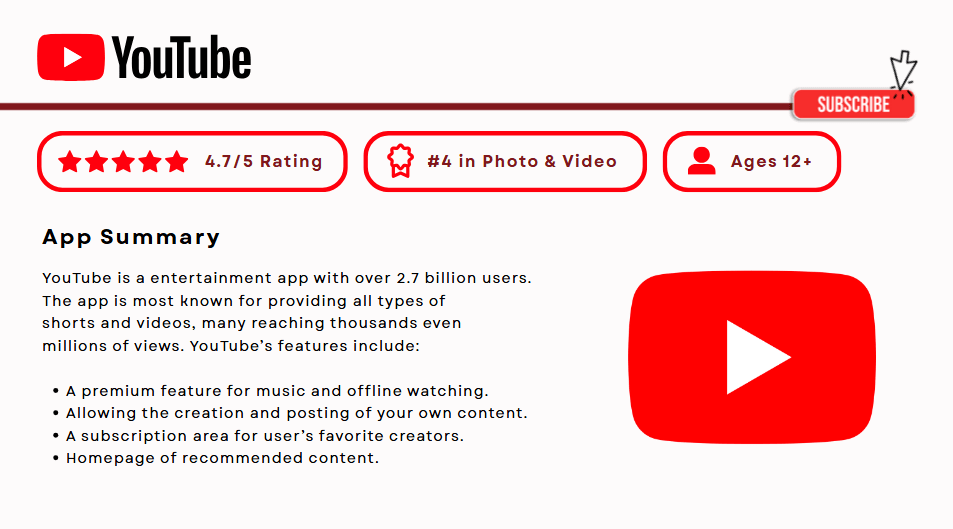
Many of YouTube’s reviews are quite positive. The variety of content and easy access to content make the platform a great place to watch videos. But there were also negative reviews. YouTube has censorship issues and many disruptive ads. Many suggestive reviews recommended better watching preferences for mobile users. Others recommended ad placements in videos.
With the reviews collected, I crafted my 2 POV statements.
- Users who watch videos back-to-back need a system for controlling advertisements because they interrupt the content, AND there is no indication of when they will happen, so users end up annoyed.
- Users who have specific viewing habits require easier access to adjust video preferences, as comfort is essential for enjoying video content.
Spotify
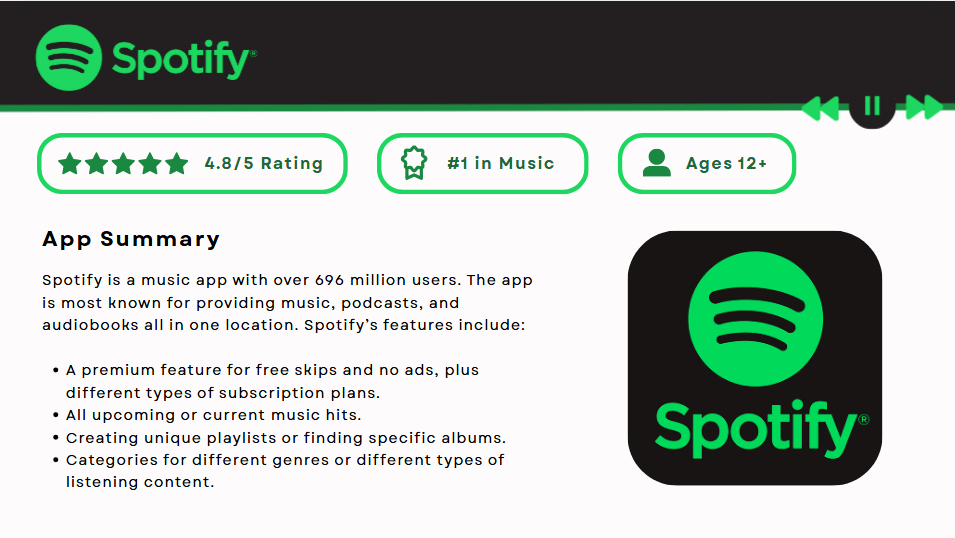
Unlike YouTube, Spotify actually had more negative reviews than positive. Many positive reviews stated that Spotify’s variety and user experience for finding songs were the best parts of the platform. But the negative reviews were more critical, with many not liking the basic features of Spotify without premium, and bugs in the user interface. Many reviews suggested updating free features to improve the experience, like adding a “hide” button to hide songs when you aren’t in the mood to listen or want to edit songs for kids’ listening.
With these reviews, I crafted my 2 POV statements.
- Users who currently own non-premium accounts need good user interfaces because if features are too difficult to work with, then they’ll leave Spotify for content that won’t charge them for better features.
- Users who want to listen to specific music need an option to limit or hide songs because not every place or person may be comfortable with explicit content or heavy topics.
TikTok
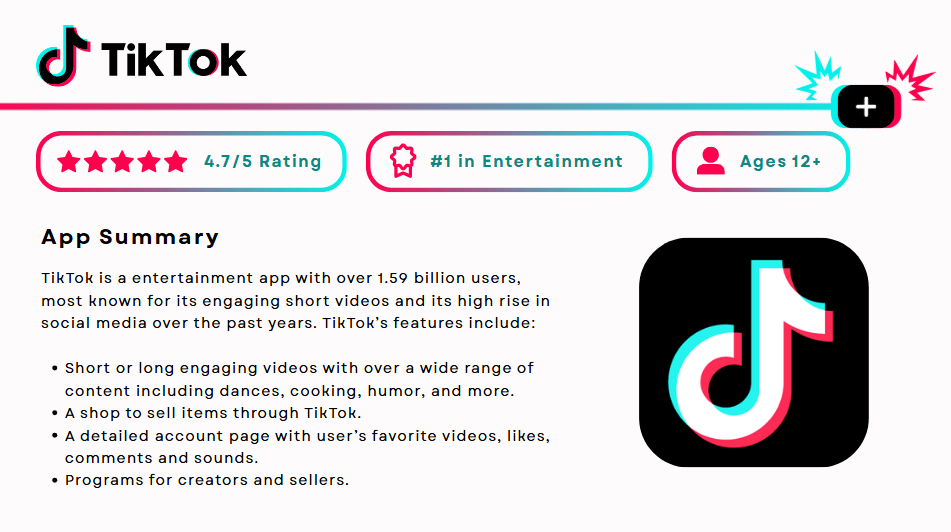
TikTok was a mixed bag of reviews. On one hand, positive reviews loved TikTok’s algorithm, stating that “it knows what we like constantly”. Reviewers also think TikTok has a great community. Like YouTube, many negative reviews talked about TikTok’s poor censorship system. Some users are being banned with no explanation. Reviewers suggested a change to the ban information system. Others suggested an auto scroller for videos like on YouTube.
With each review, I made my 2 POV statements.
- Users who have been banned from TikTok need to be able to respond to a ban because many lack information on why they happened, so users end up being disappointed and frustrated.
- Users who wish to continuously watch TikTok without scrolling need to have the ability to auto play the next video because it makes the user’s physical tasks easier while still being engaged with the content on screen.
What Can You Take Away?
When I look back, I see just how beneficial POV statements really are. Every time I found a review that spoke negatively or wanted changes, I never saw them as bad critiques. The final POV statements come from these perspectives, problems that simply haven’t been addressed. POV statements aren’t just about understanding the user’s problems; they lay the foundation to help provide solutions in the future. Experience makes apps worth being a part of, and POV statements help change negative ones to great ones.
Here’s my full review if you want to check it out!
 The Simple Look
Leave a comment