
When we go through a service or task, we don’t think much of it. Like watching a movie. We move from Point A to Point B, with little notice of the process. But while we may not think that much of a service, people within the product world (designers, marketers, and customer service) absolutely must.
But why? What exactly happens during the process of using a service or purchasing a product that warrants such a thorough examination? This week, I created a journey map to understand how the service process affects the user’s actions, feelings, and ultimately, how the service can be improved. My scenario: buying a movie ticket.
What’s a Journey Map?
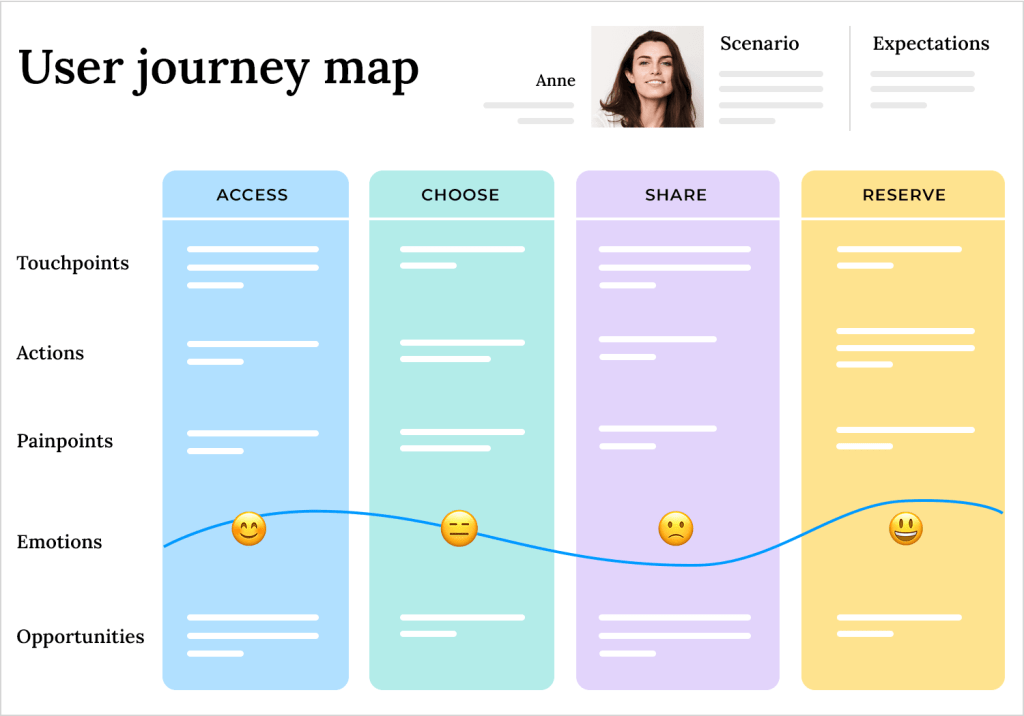
A journey map is a visualization of the process that a person goes through in order to accomplish a goal. Many designers use them as a way to help make the user’s journey into an organized and creative representation of a process. Journey maps also have different variations. The one I would be creating is a Customer Journey Map. A customer journey map focuses specifically on:
“the customer’s experience: from initial contact, through the process of engagement and into a long-term relationship”
By using a customer journey map, we aren’t just mapping a goal; we are tracking the customer find their product/service after they have purchased. A complete process.
The Journey Map Setup
Journey maps come in many setups. Some sections will be more than others, but there are always common features amongst all journey maps. Let’s follow mine to see how a journey map works.
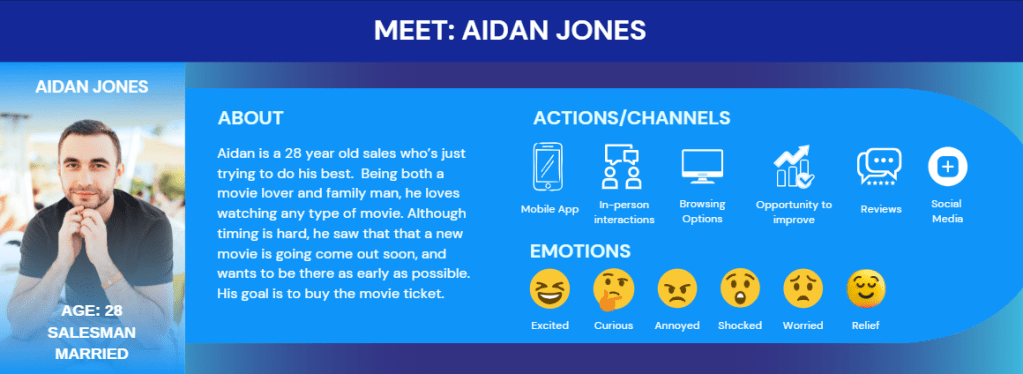
1. The Persona
They represent the audience. The persona includes demographics, personality, and influences. For example, my persona is Aidan Jones, a 28-year-old movie lover looking to purchase a movie ticket. He’s a family man and works as a salesman, so timing and money play a key role in his process.
2. Process Stages
All journey maps have stages to make a timeline of the user’s progress in the ticket purchase. For mine, I focused on 5 stages to map out:
- The Starting Point: Where Aidan first discovers the movie he would want to watch through social media.
- Exploration: Next, Aidan explores the different theaters on where he can go. He considers seeing how users felt on the movie.
- Selection: Aidan looks at the amount and seat for the movie. He wants to buy some for his kids too.
- Purchase: He bought the tickets, content with his purchase.
- Post-Purchase: Now he waits till he can use the ticket, working on if he should talk to the theater workers if he has any problems.
3. Empathy Mapping
There should always be sections for user empathy. Many journal maps like mine provide the user’s thoughts, their actions, and their interactions with either the physician service (touchpoints) and their means of interacting through devices like mobile apps or computers (channels). To me, this area plays the most important role in the journey map, because without understanding their thoughts and process, you ignore why the user would want to use a service in the first place. Why look into movie purchases if you don’t even see who’s making said purchase?
Our Process Matters
I found that a journey map is enlightening on how a user interacts with a service. The emotions especially shocked me, because I needed to place myself in situations that normally don’t affect me. For example, in the Selection stage, I found that an improvement should be made for kid discounts, because it’s a concern a family man would have. I wouldn’t have known otherwise.
The organization pulls everything together. You see where issues can be avoided and what thoughts should be changed. If a process needs improvement, then a journey map is a great way to get such results.
Here’s my full journey map below!


 The Simple Look
Leave a comment