

When we were kids, I bet you were taught, or at least knew of, a specific golden rule. Treat others the way you want to be treated. A statement on how it’s important to show kindness and empathy to people, even strangers we don’t know. And empathy is everywhere. From the strangers who hold the door for you to the friends who understand you as if you were family.
But one unexpected area that contains empathy is research. Empathy research plays a critical role in everything from businesses to product creation, design thinking, and more. If you or anyone is looking to understand how to reach an audience, then empathy is the way to go.
Why Empathy Research, Though?
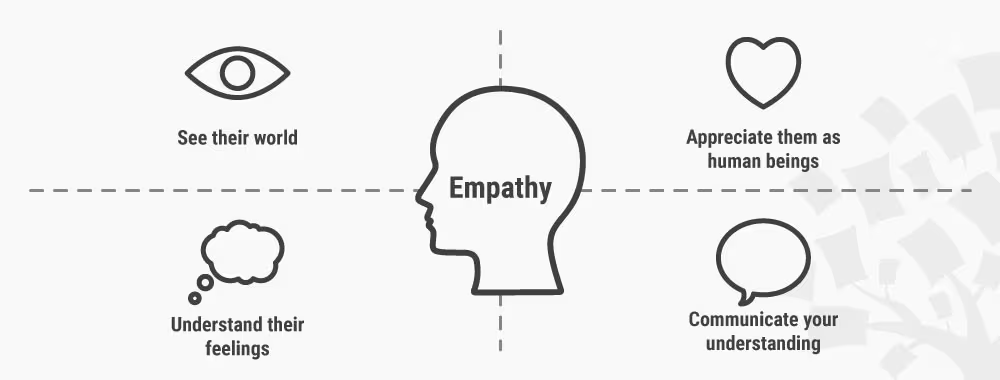
Empathy research does a number of things for us:
- Allows for a greater understanding of people’s emotions and needs
- Gain insight into the way people see, not just generalized information.
- Focuses on subjective perspectives rather than objective facts.
Taking the deep dive into empathy means being willing to learn people’s feelings and needs along your journey. Luckily, there are many methods of empathy research at our disposal. Below are some common ones you may have heard of.
What/How/Why Method
Another great way to understand someone’s empathy is the What/How/Why Method. This method is great for areas that require an understanding of observations, like Sports, Entertainment, or Product Testing. The What/How/Why follows three steps to understanding a person’s observations or approach to something:
- What: Describe the scenario. What is the person doing? What is happening in the background?
- How: Describe the interactions: Is the person putting in a great deal of effort? Is the person frowning or smiling while doing the task?
- Why: Interpret the scene based on the What and How observations. Guess the driving forces behind the observation.
Using a method like this is beneficial because you can have a great understanding of a person’s process of using a product, having their experience as a major contributing factor to fixing an issue or problem. A great way to understand the What/How/Why through simple imagery. Look at the image below.

- What: The guy is doing pushups outside. It’s a nice day, great for exercise.
- How: The man is focused; his face shows his concentration. He’s got sweat on his shirt. He’s likely been doing the push-ups for a while.
- Why: The man looks to be trying to stay in shape. This means he cares for his health and the safety of his body. The concentration is also a key feature. His consistency is another key factor in his need to stay in good health.
The Five Whys
Similar to the How/What/Why method, the Five Whys Method is another great way to understand someone. This method is:
“The practice of asking why repeatedly whenever a problem is encountered in order to get beyond the obvious symptoms to discover the root cause.”
The Five Whys method is simple. Once a problem is found, you simply ask why five times per answer. The concept makes the Five Whys method a universal take on problems. Here’s an example of what the system looks like.
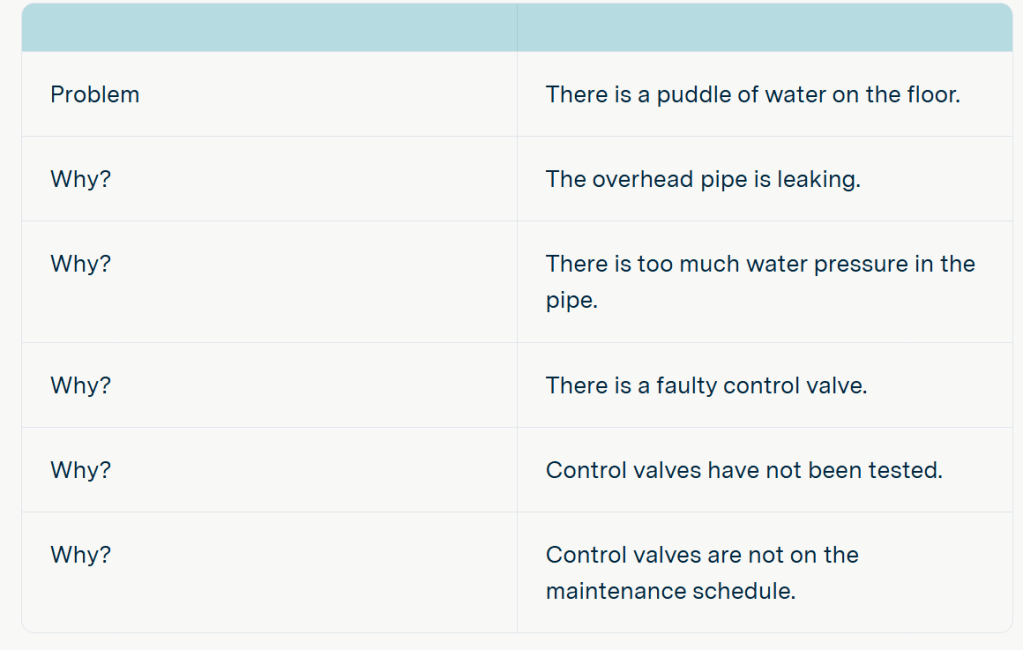
Notice how each answer gets more and more specific? The method focuses on the deeper reasoning of a problem. The questions guide the user to explain their view in a complex way, allowing for better understanding to a possible solution.
Contextual Interviews
Sometimes whys and how’s aren’t enough to get a good understanding of an observation. That’s why Contextual Interviews can be a great tool in empathic research. These types of interviews require the interviewer to follow the user as they go through a task, with questions only happening near the end or not at all. Contextual Interviews put emphasis on the user’s process rather than just asking traditional questions.
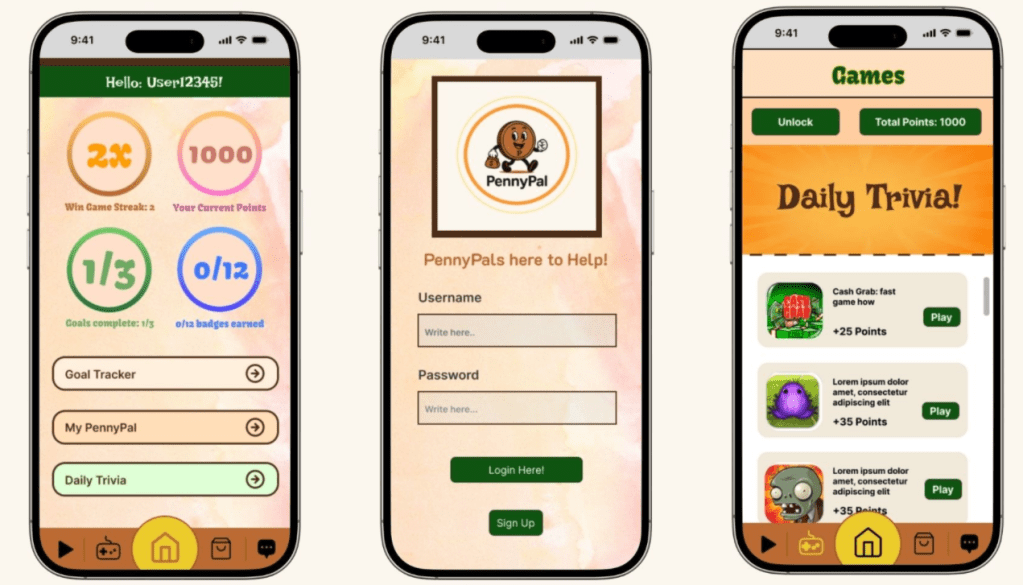
A great example of contextual interviews was for my Design Sprints app, PennyPal. My group and I designed PennyPal for Gen Z teens looking to advance their knowledge about finances. When we wanted feedback for our app, we allowed our participants to do anything they wanted in our app. We noticed how many sections were drawn like tracking their money goals (left) or playing a game (right). Based on both our participants’ feedback and our observations, we improved many of the app’s functionality and navigation.
Bodystorming
Observing isn’t the only thing you want to do for empathy research. Acting may be your calling. If that’s the case, Bodystorming is the perfect research tool to use.
“ Bodystorming is an immersive user research technique where researchers physically experience a situation to ideate and gain deeper insights.”
This method is a very popular tool for design thinking and product design. During the prototyping of a product, bodystorming is conducted. The method requires physically acting out the possible solution and can even use props/accessories depending on the solution. The benefit of this method is that the designers play out scenarios and get to experience authentic movements and changes their users may come across.
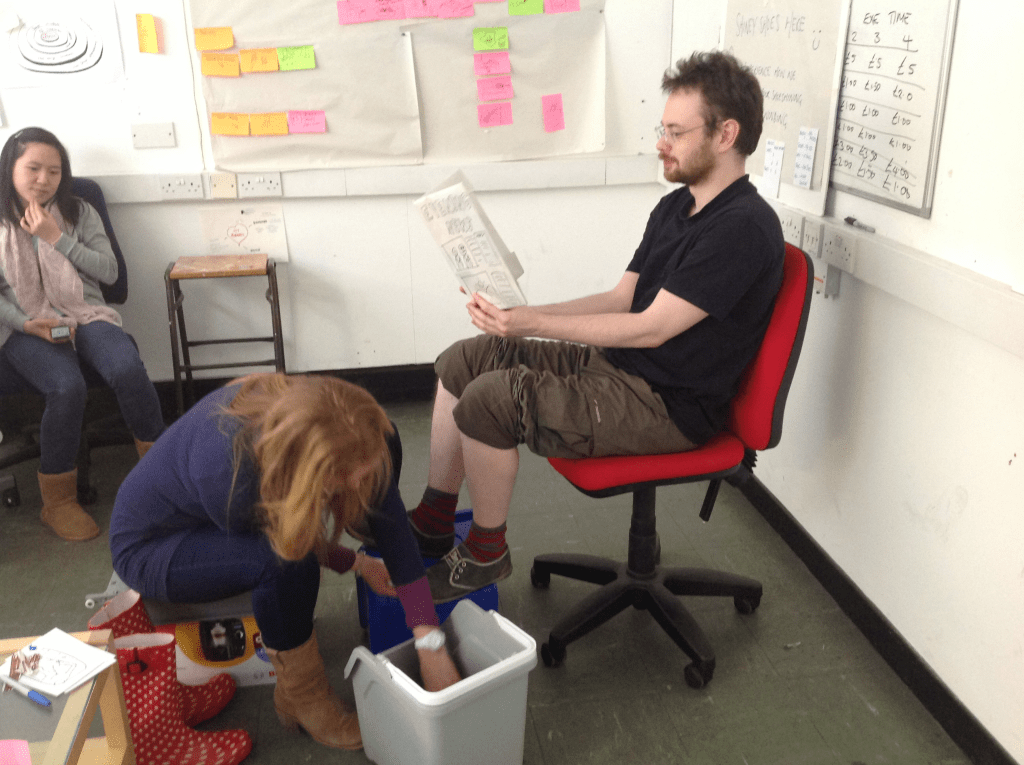
In the photo above, the designers were conducting a prototype of shoe shining. What they found was that even though their shoe-shining service was good, the “client” didn’t have anything to do. In one of their sessions, they gave the guy a newspaper. He explained afterwards that the newspaper wasn’t a part of the process, but the addition helped make the prototyping more comfortable for the user.
What to Takeaway from the Methods
Each empathic method serves to provide a detailed understanding of the user’s experience. If people don’t consider the users feelings in mind of their service/product, then a user will find a better option that will. Because ultimately, if you aren’t trying to help the people you want to reach, then who are you truly reaching for?




 The Simple Look
Leave a comment