
Introduction
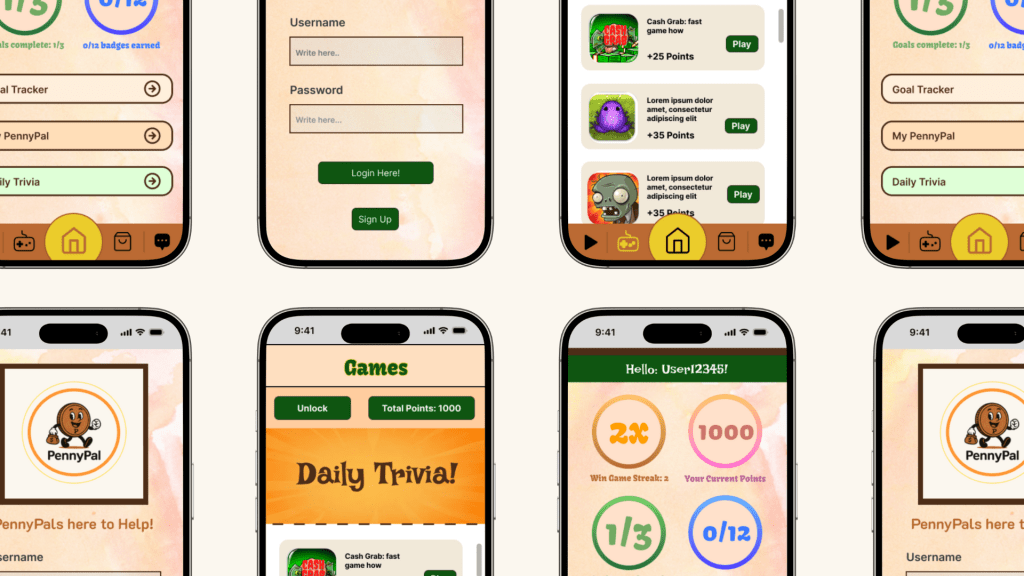
To learn about the steps of a design sprint, I was tasked with creating an app with a group of people from May 19th to June 27th. Within this design sprint, we were tasked with making an app suitable for Gen Z to help teach them about how to best manage their finances, as Gen Z especially consists of lots of ages, with its lowest being 13 and its highest being 28.
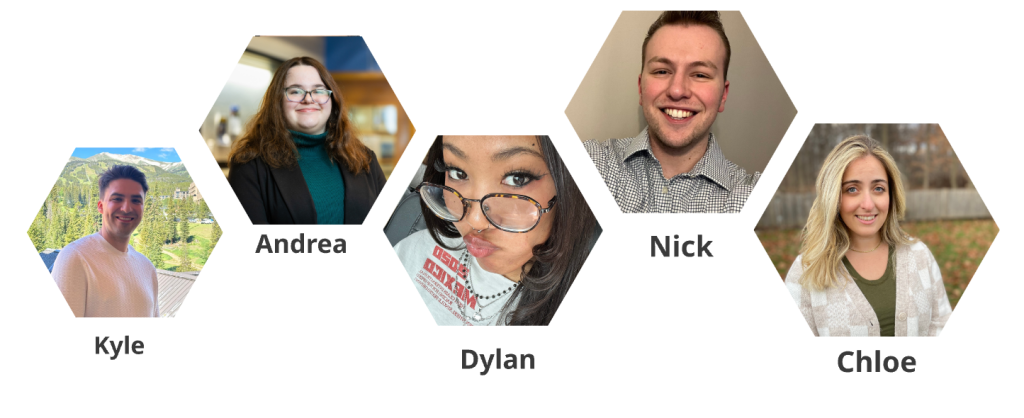
My group consisted of 5 people: Kyle Adams, Chloe Levy, Andrea Domingos (me), Dylan Tse, and Nick Pagonis. We were known as the Blue Team. Over the weeks, we worked together to bring an app that was beneficial to Gen Z and brought the world of finances in a fun and unique way. We set up a series of goals to help organize what we all want out of the app: PennyPal.
- Creating a digital platform for the distribution of helpful financial education
- Teach financial literacy skills, which allow for approaching situations like financial planning, budgeting, investing, and long-term money management.
- Assist Gen Z by making a mobile-first experience that informs their financial choices in alignment with their personal and career objectives.
- Establish areas where users can interact and discuss their goals in a friendly environment.
- Offer users the opportunity to accrue points for redemption to acquire actual discounts in the real world.
Sprint Overview
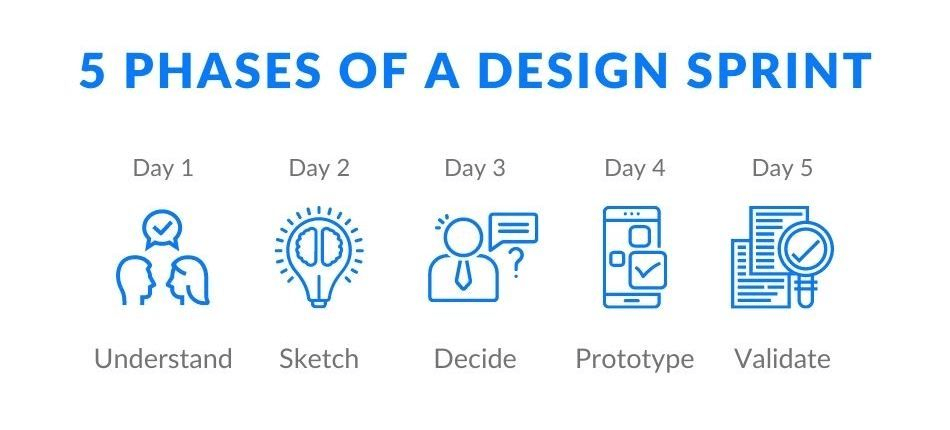
What exactly is a design sprint? Defined by the Sprint Handbook, a design sprint is meant to
“…help startups and teams quickly solve critical problems and validate ideas in a compressed time frame.”
These design sprints are meant to last over five days and consist of different phases across those days: Understand, Define, Ideate, Prototype, and Test. For our workload, each was also set up into its own phases.
- Phase 1: Map & Sketch: This phase consists of mapping out and sketching the basic foundations of what your design could look like. It means finding out how we might solve our main problems through our sketches.
- Phase 2: Decide & Storyboard: This phase focuses on deciding which sketches will be the main focus of the app. Through a series of voting, the final sketches are picked to be turned into storyboards, being the foundation of all prototypes forward.
- Phase 3: Prototype & Refine: This phase focused on all prototyping of the design being created. These include any low, medium, and high fidelity prototypes to be made.
- Phase 4: Test & Collect: This phase consisted of testing potential users on the prototype created and collecting data on how they feel, what they like/dislike about the prototype, and what could be improved.
- Phase 5: Reflect & Report: This phase acts as a reflection of all of the work and data, and acts as a way to write down the process of everything that has happened during the design sprint.
Problem Statement & Research
“A person categorized in Generation Z (Ages 13-28) should use the educational smartphone app PennyPal to teach his/herself the ins and outs of financial literacy, as well as formulate a long-term budgeting, saving, and or investing plan”
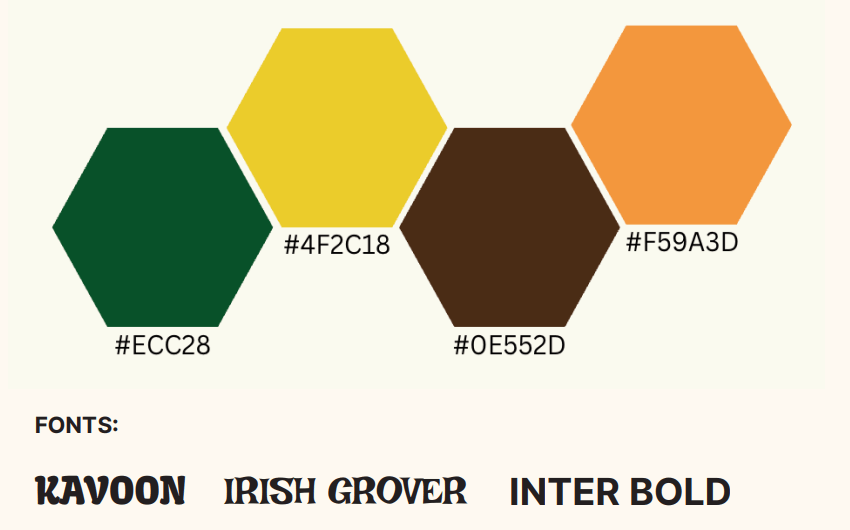
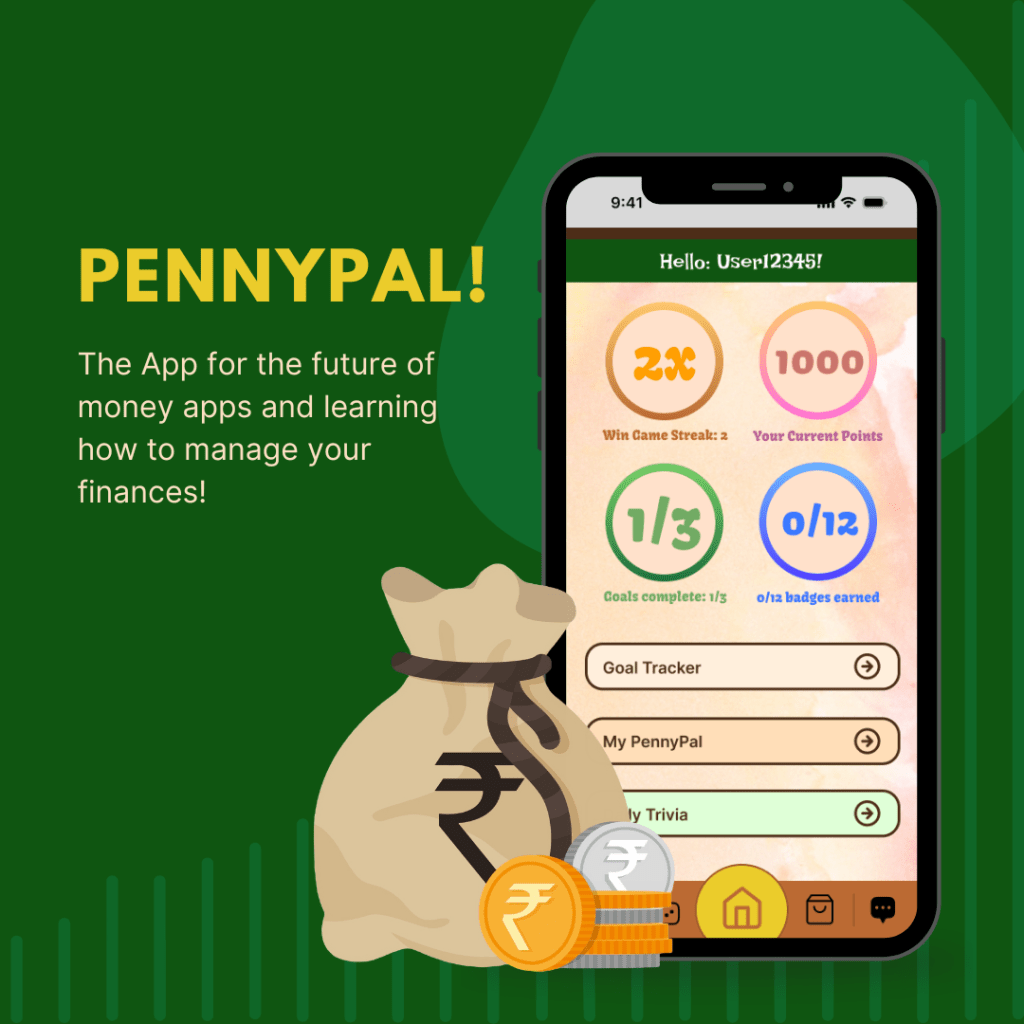
Our focus on Gen Z made us want to think outside the box for a lot of your colors and fonts. We decided on staying away from the traditional colors and fonts that apps like Credit Karma and Bank of America have (reds and blues especially). We want to make our app stand out amongst the crowd, so we decided on a brown, green and orange/yellow color palette with Inter, Irish Grover and Kavoon as our fonts.
Sprint Activities: Phase 1
Phase 1 activities consisted our map of the app, lighting demos and our 4-step-sketches. First, our user map. It allowed for us to see how a user would travel through out PennyPal.
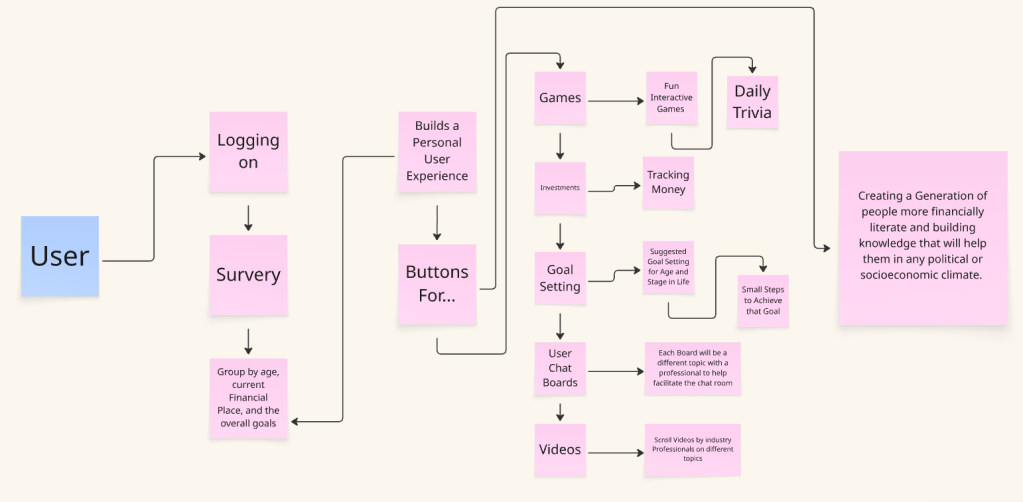
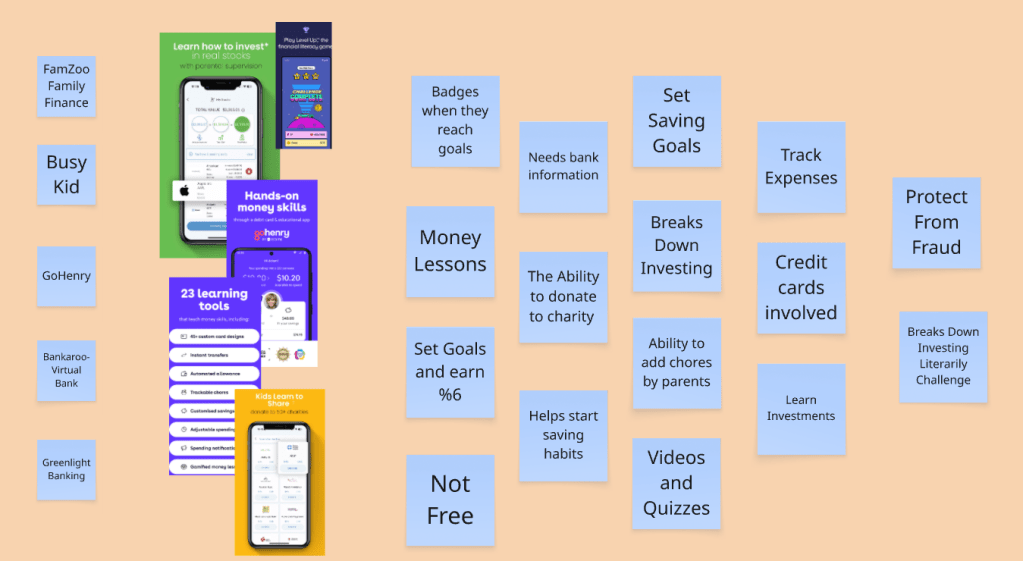
After we laid out our map, it was time to for the lighting demos. Each group member picked out an app we found interesting and would explain the features we liked the most and could possibly incorporate into PennyPal.
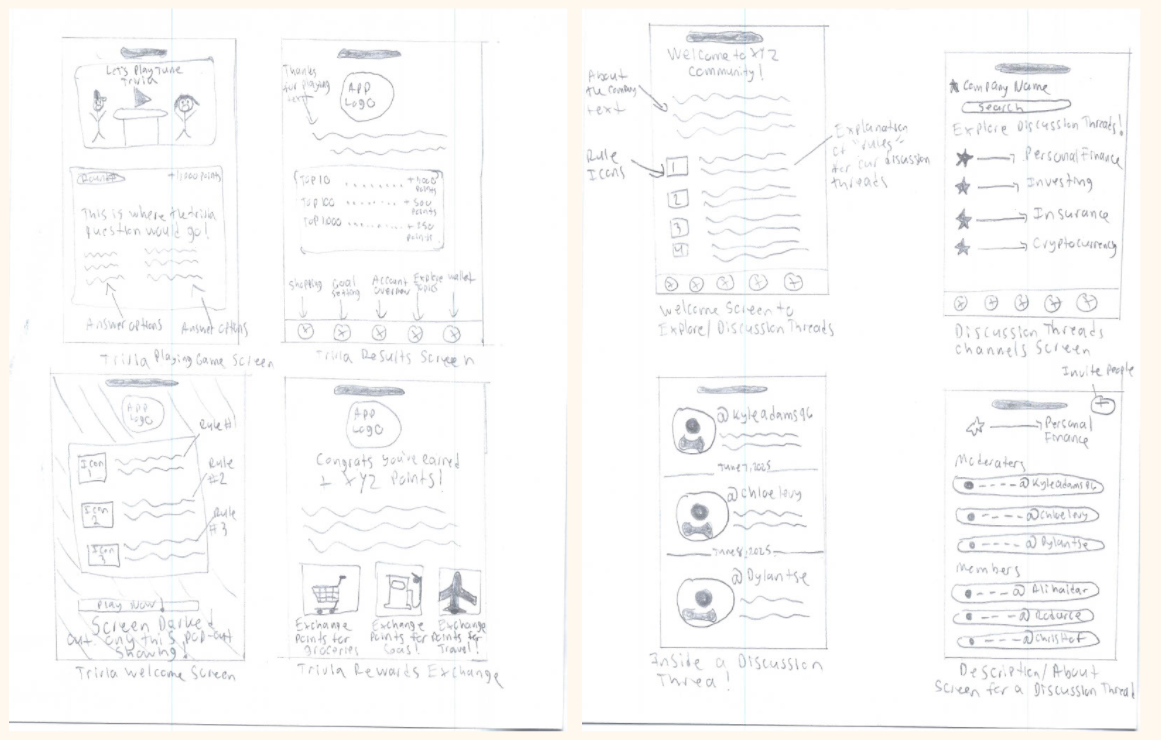
Lastly, we focused on our 4-solution-sketches. Each group did their own and it allowed us to see all the different ideas that each group member had. It would also beneficial later as they would step up as the sketches to be voted on in the next phase.

Sprint Activities: Phase 2
Phase 2 activities had Voting, User Flows, Storyboard. We began with voting. We used Heat Map voting as it allowed for everyone to voice their opinions on which sketches they liked the most. After the sketches were finalized, the decider chose the 5 sketches they liked the most, guaranteeing that those sketches would be the start of the storyboard.
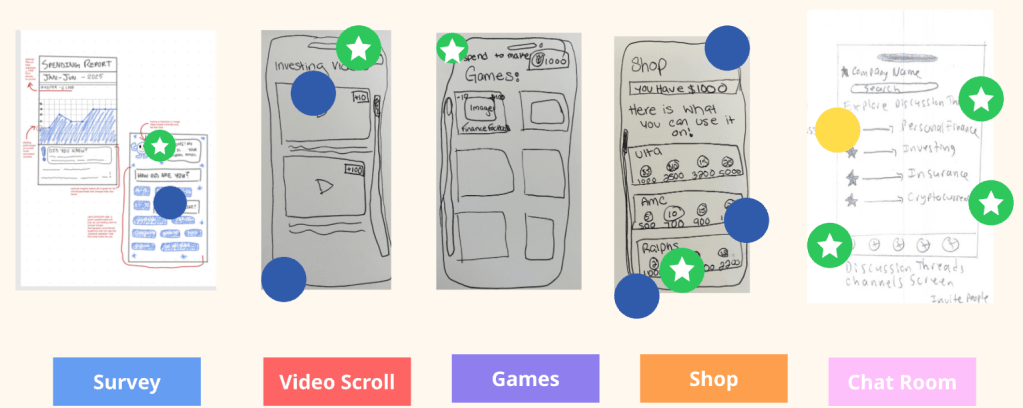
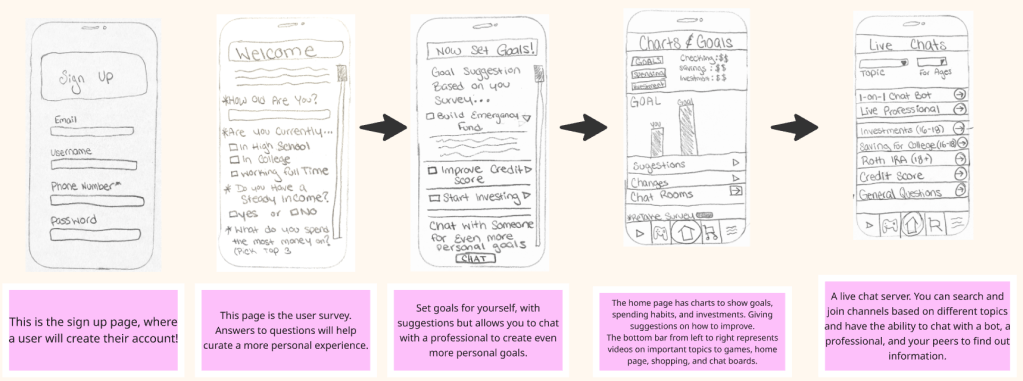
Our next priority was the user flow and storyboard. Using the sketches, we worked on creating a user flow that helped indicated where the user would be able to go in PennyPal. This user flow became the starter of the storyboard created.

The storyboard took those main ideas in the user flow and transferred them into more finalized sketches, making Phase 2 feel flow extremely well and fast overall.
Sprint Activities: Phase 3
Phase 3 activities were on Wireframes, Mockups, Interactive
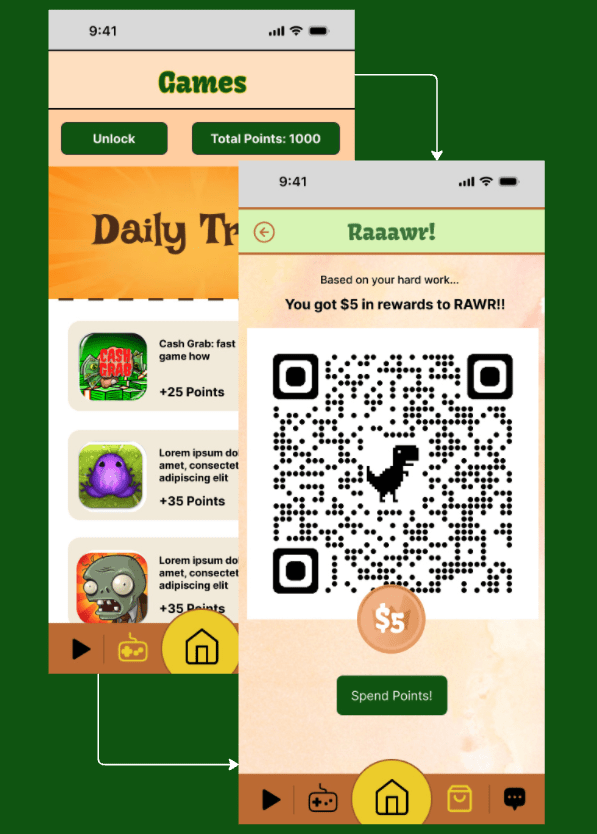
Prototype. The wireframes were used to help create two different prototypes: one low fidelity and one high fidelity. We first started with the low-fidelity, done completely in the Marvel App. Then, the low-fidelity set up for the high fidelity one, using Figma as the main site. Both were helpful in their own. The low fidelity allowed for a better understanding of transitions and where everything would go, while the high fidelity allowed for a more completed product to be visualized.

Results & Outcomes: Phase 4
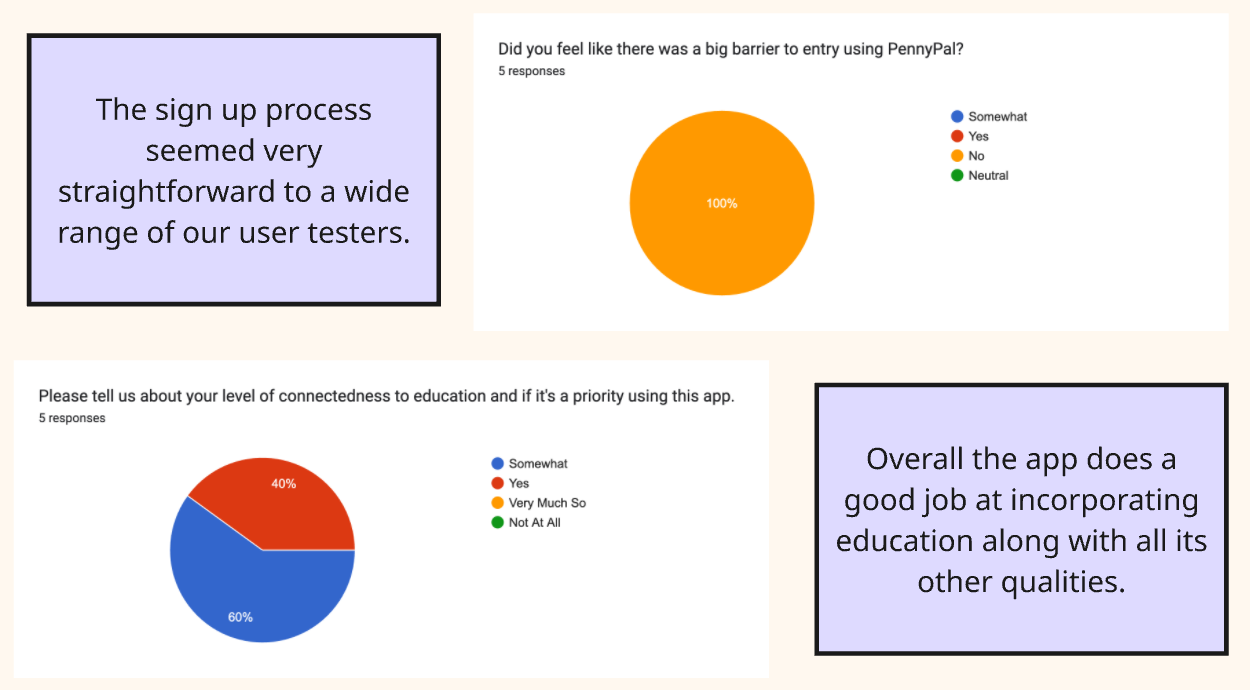
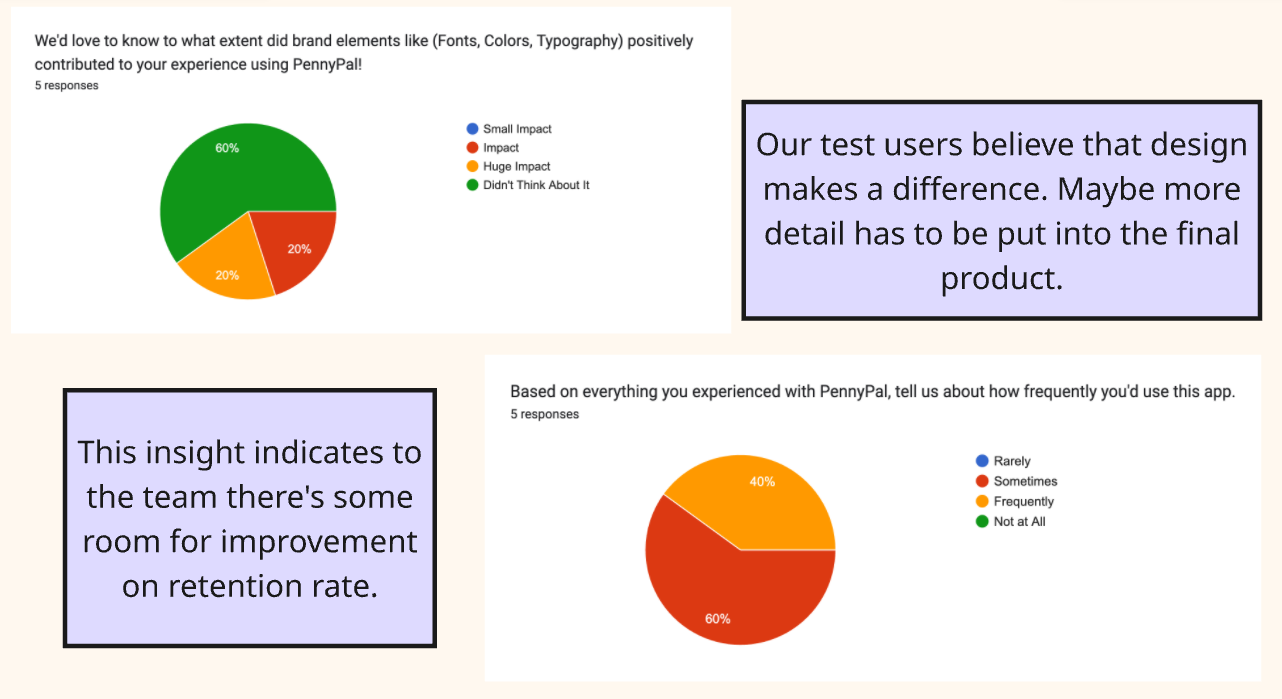
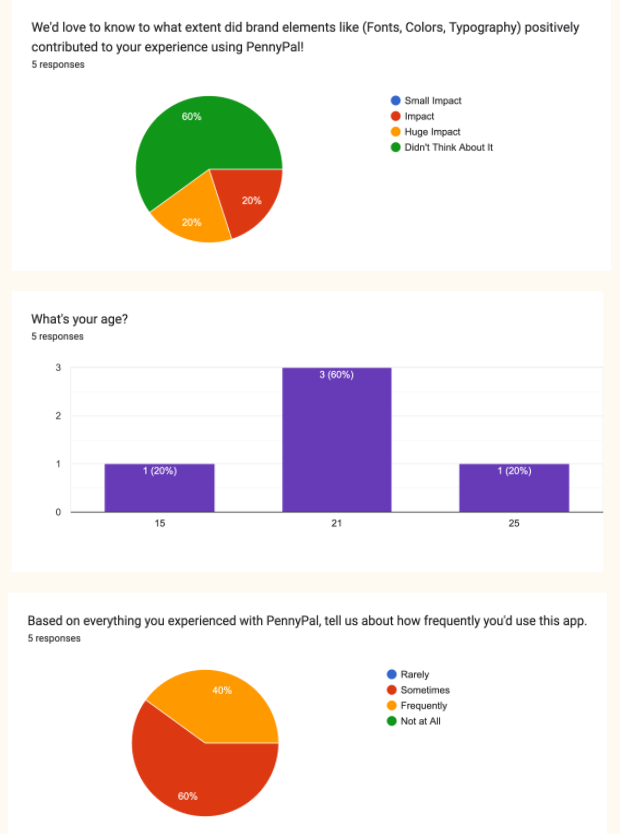
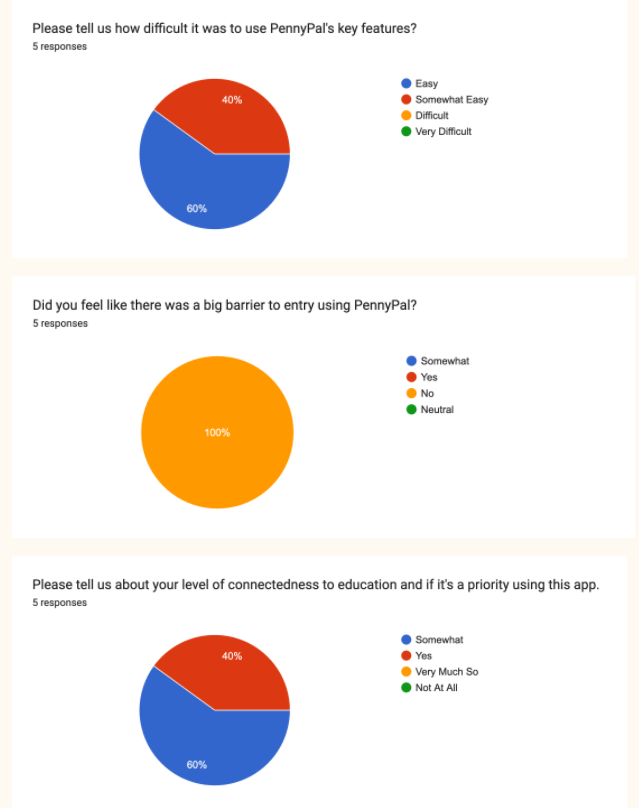
The user testing lasted for almost 2 hours. During these user testing slots, PennyPal came off to be a successful app. Many of the users found that the app was easy to navigate and overall provided content they thought was useful. Many user testers were fond of the games and goal setter system, especially as the games helped bring fun and creativity, and the goal setter could set their own goals on what to learn and could create a healthy system of goals to improve their finances. An interesting insight we found was how expressive the testers were; they seemed genuinely excited about exploring the different app features and what they could do.

Learnings & Reflection: Phase 5
As we finished the sprint process and outcomes, I found myself at a loss for words. It was incredible being able to accomplish so much with a group of people in such a short period. Design-wise, the sprint helps create a system that allows for a limited time but also increased workload within a series of days. And I found it interesting that despite having a week instead of a day per phase, everything still felt like a lot.
The sprint also taught us how to get through certain issues early on, as communication was a bit of a problem. We decided to all discuss our feelings and acknowledge how we could better communicate, and encouraged each other to participate if an idea seemed uninteresting. It was this communication and openness that helped push the design sprint process forward and made sure that everyone had a say in the work.
Conclusion & Next Steps
Having the opportunity to learn how to apply critical thinking to research, design with empathy, and connect with others through moderation and facilitation are all skills that are the byproducts of completing a Design Sprint. The sprint created a system that all designers can utilize across any field. I had a great time doing the sprint and would love to make PennyPal reach more people.
I say this because our goals were completed, and PennyPal was able to provide an experience for its users that was both fun and informative. This app requires some changes, but regardless, a lot of the benefits that came from PennyPal made it so that in the future:
- Refined core features will make for a better user interface navigation across the PennyPal platform.
- Expanding into more connective content, like the chat feature, will help provide users with a welcoming environment and great connections within PennyPal.
- Looking towards social media and developers would expand the reach of PennyPal and invite more users to join this community.
Thank you for reading!

 The Simple Look
Leave a comment