
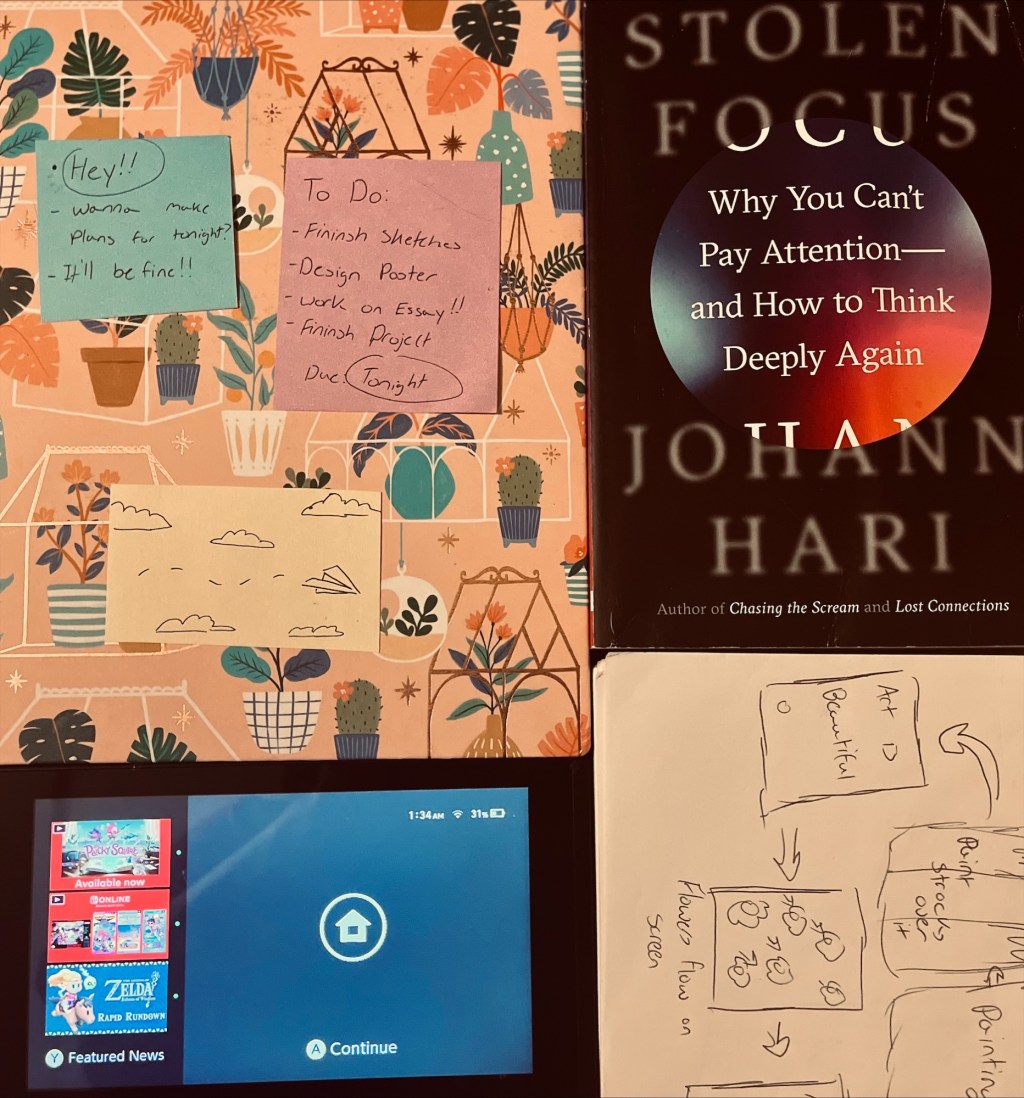
People get distracted by social media. It happens; you see a cute post, find a good book, or watch a new video and suddenly you’re no longer making progress on the lab report due this week. With our attention constantly being grabbed, it’s not uncommon to find yourself feeling like you can’t get anything done. You are not alone in this matter. I, myself, feel easily distracted by social media because it makes me frustrated when I don’t get work done. So I began to explore better ways of avoiding these social media distractions and keeping my focus on work and assignments.
Managing Projects/Work
The first main way to avoid distractions is learning how to manage your work. One of the most common ways this is done is through project management. Project management is the study of planning, measuring, and executing a structure for your work/project. What makes project management helpful is that many different strategies can be used to help you focus on your work. Jennifer Bridge’s 7 Work Habits You Need to Succeed – Project Management Training video is a great example of project management strategies. It lists a bunch of tactics to handle your work. These are taking criticism well, not blaming others, problem-solving, being dependable, giving yourself time, not knowing everything, and using your phone accordingly. Especially at the end, the content creator in the video states that the way we manage our phones is super beneficial. While our phones can be useful, using them for too long will ultimately lead to distractions unless you’re driving, in which case you should keep using your phone. The other strategies will also help you stay focused on work, like thinking of improvements, relying on others, and learning how to properly analyze your work.
Another video by Bridge is How to Work Smarter, Not Harder is also really helpful for managing your work. This video shows that while yes, working hard is effective, being able to work smarter can be just as effective. The video lists “working smarter” habits that can help people out. These include: understanding your abilities, setting boundaries, scheduling through a calendar, getting help from mentors, creating a process, and asking questions. These techniques allow people to have a greater understanding of what is effective for themselves. If people can go through these different methods and processes then social media posts will be nothing more than an inconvenience.
Knowing What Distracts You
While there are many methods to avoid distractions, it’s also important to know what exactly is distracting you. Stolen Focus by Johann Hari researched distractions in Chapter 9 and learned that the reason why we get distracted is that social media causes an “internal trigger”. These internal triggers can vary but I’ll be using Nir Eyal’s video Learn How To Use ‘Triggers’ To Create A Habit-Forming Product. It describes internal triggers as “subconscious cues that tell users what to do through mental associations.” The reason internal triggers vary is because they can be both negative and positive. Positive internal triggers cause a rise in dopamine, making you stay invested in content, while negative triggers like loneliness or boredom cause you to try and connect and keep coming back. Hari explains that social media platforms have done extensive research on what people like. Alongside user data, social media companies like Facebook can give you what you want to see and keep you focused on what you are looking at. Hari believes that understanding what causes the internal triggers is extremely important. For me, my triggers revolve around content that is funny to me and connection. So habits like texting and videos are some of my biggest distractions. But now that I know what causes the triggers I can better avoid them for the future.
Conclusion
Your distractions won’t define you. There are ways of keeping ourselves from being distracted. Learning your distractions and practicing project management are super helpful to not only distractions but also other fields like time management, expanding your attention span, and practicing long-term work sections. With all of these new strategies, I have been able to limit my distractions on social media much more effectively, and have been able to continue keeping those distractions away.

 The Simple Look
Leave a comment